

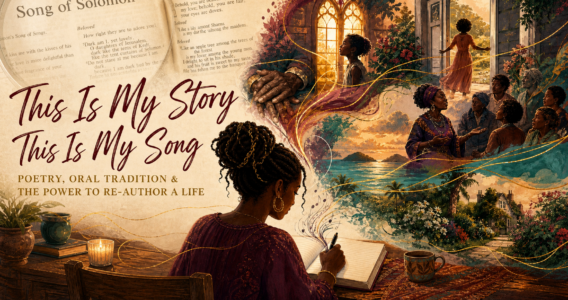
This Is My Story, This Is My Song
This Is My Story, This Is My Song is a line that has stayed with me for much of my life. It carries both a spiritual memory and a personal invitation: to remember that our lives can be named, shaped and re-authored in our own words.
It comes from the chorus of Blessed Assurance, the 1873 hymn associated with lyricist Fanny Crosby and composer Phoebe Palmer Knapp: “This is my story, this is my song, praising my Saviour all the day long.” For me, those words carry the soundscape of childhood: being raised by Antiguan and Kittitian immigrants from colonial island cultures, shaped by God, the Queen, church, aspiration, discipline and a British middle-class education.
But the words also reach beyond that immediate ancestral memory. They lead me towards the great oral traditions of Africa and the African diaspora: traditions in which song, story, proverb, poetry, performance and remembrance carry knowledge from one generation to another.
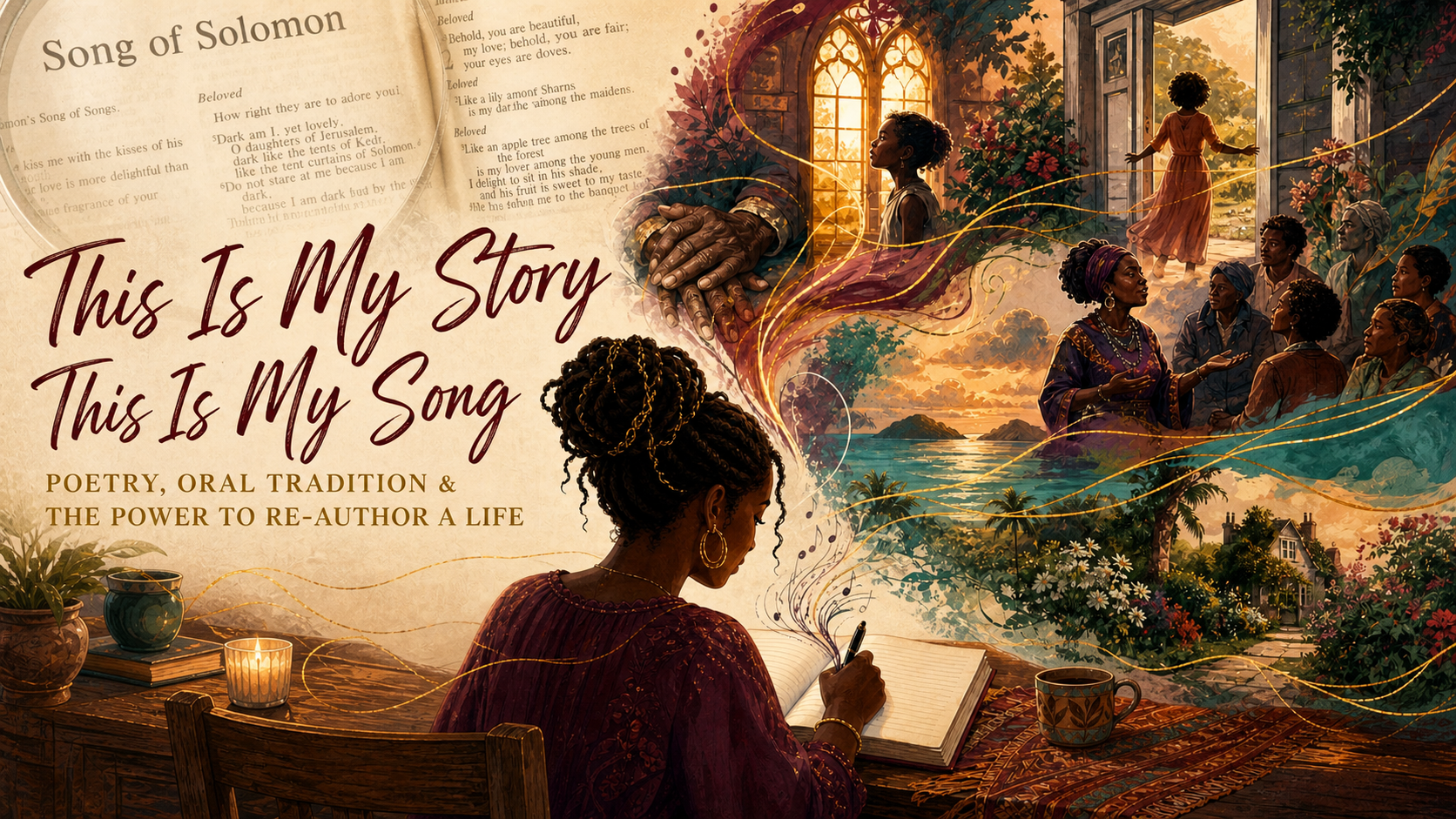
Writing the story
At its heart, my work is about the importance of writing your own story and becoming an active narrator in your own life.
This connects with narrative psychology and narrative practice: ways of understanding that recognise people as meaning-makers. We make sense of our lives by linking events across time and giving them meaning. Yet no one is only one story.
A person’s life can hold struggle and joy, loss and skill, injustice and resistance, fear and imagination, all at once.
More than what happened
Sometimes the loudest story is the one shaped by hardship, by what has happened to us, or by labels other people have placed upon us.
Difficult. Broken. Too much.
Not enough. Failure. Victim.
Those descriptions may have real effects, but they are not the whole truth. Poetry helps us notice the stories that have been overlooked.
The overlooked story
Poetry can hold the story of the person who kept going; the child who held on to imagination; the woman who found language; the family who carried culture through migration; the community that continued to create, gather, sing, remember and hope.
It can hold what an official report cannot: the rhythm of a grandmother’s voice, the smell of a childhood home, a silence in the body, a moment of defiance, a prayer, a longing or a dream.
This Is My Story, This Is My Song—told daily
This Is My Story, This Is My Song is not simply about telling stories or sharing lived experiences. It is about imagination, drive and determination—the capacity to shape a different world.
Life is a story told one day at a time. If you do not like the reality you are living, it can matter to tell a different story about your life—not as denial or empty positivity, and not as though words alone can remove structural barriers or pain.
Rather, it is about recognising that the story we live by affects what we can imagine, attempt, ask for, resist and become.
This Is My Story, This Is My Song becomes a daily practice of remembering that our lives are not finished, and that the next line can still be shaped by imagination, courage, community and hope.
What if I am not only what happened to me?
What if my survival is also knowledge?
What if I am allowed to imagine another future?
What if the next line is mine to write?
Giving meaning its due
Narrative work is not about inventing a false, happy ending. It is about paying attention to real moments of courage, care, skill, connection, humour, resistance and hope—then giving those moments the meaning they deserve.
A different story does not deny pain. It allows pain to sit alongside the skills, values, relationships and imagination that have helped someone survive.
What has kept you going?
Who has witnessed your strength?
What knowledge has your life taught you?
Documents of recovery
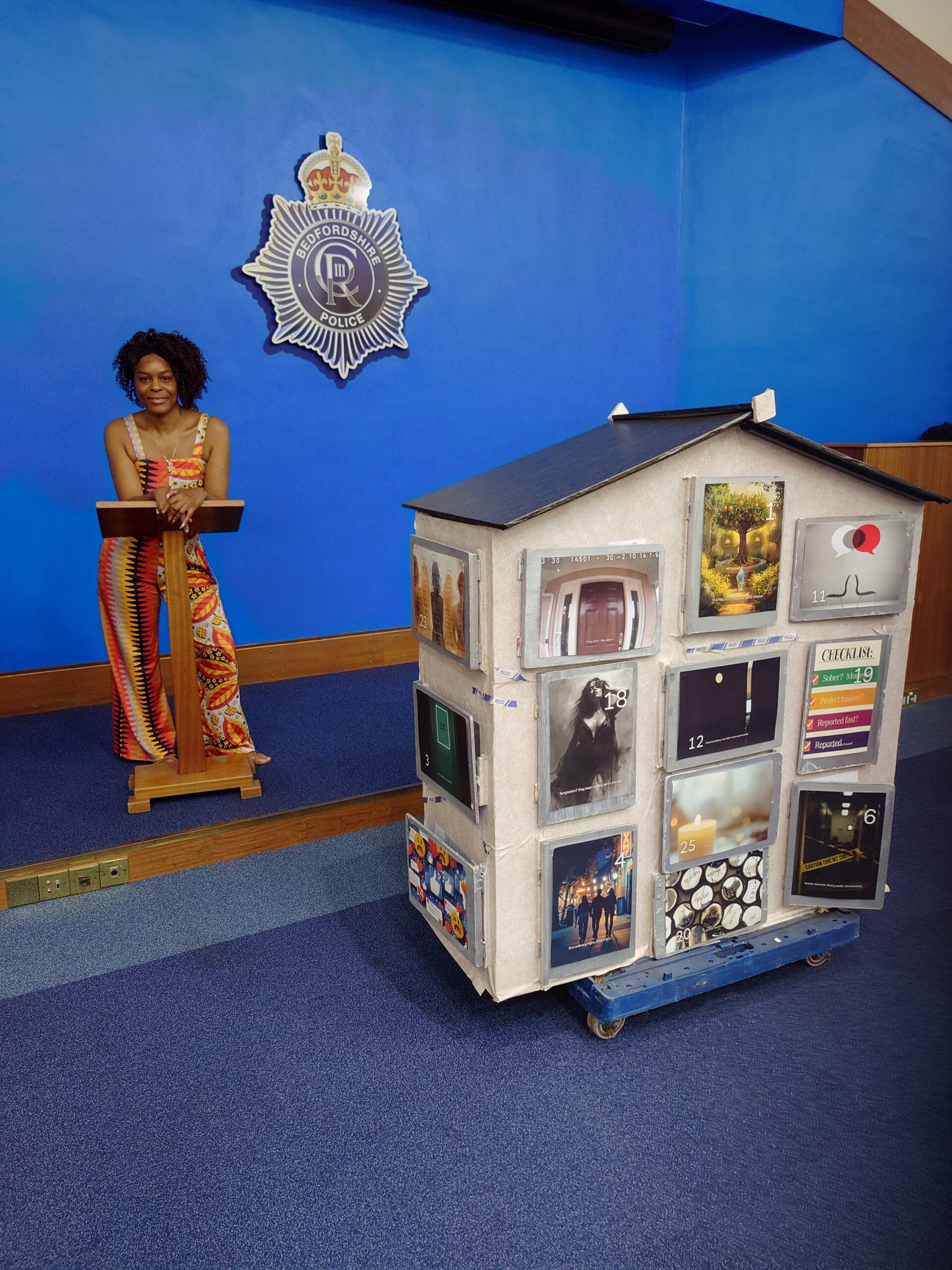
This is why the work I do across Bedfordshire matters so much to me. It is why we create spaces such as Our House. It is why the doors matter: the doors that have been closed, the stories held behind them and the possibility of creating safe ways in.
It is why Butterflies in Shades of Grey, the Bedfordshire projects and my work through Nine Red are all connected. It is why the Bedfordshire anthologies matter—young voices, cultural voices and women’s voices.
These are not only collections of poems. They are documents of recovery.
I was here.
I have something to say.
My memory matters.
My culture matters.
My voice belongs in the record.
Witnessing in community
The same is true of installations, readings, workshops and shared creative spaces. When someone enters a room and reads a poem, the work does not remain on the page.
A relationship begins between writer, words, reader and place. Someone’s story is encountered. It is heard. It is allowed to matter.
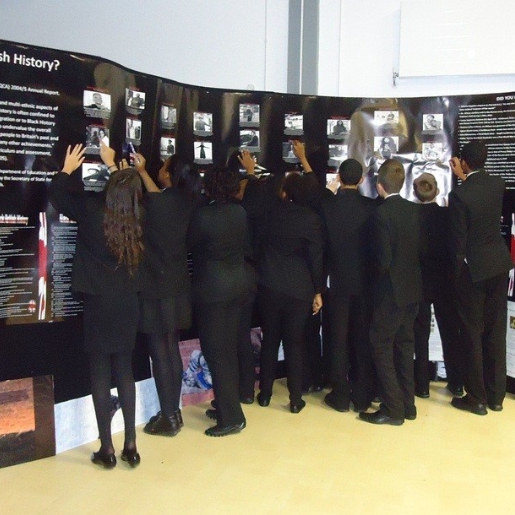
That is witnessing. It is also why photographic exhibitions, timelines and public creative archives matter: they make cultural memory visible, invite people to encounter histories they may not otherwise know, and help ensure that stories are carried forward.
Creating the conditions
For me, witnessing is not about speaking for people or trying to fix them. It is about creating conditions where people can speak, be received with care and encounter themselves as more than the narrowest story they have been given.
The storytelling traditions that inspire me are communal. They remind us that stories are not only owned by individuals; they are also carried, responded to and kept alive by communities.
Song, folktale, epic, proverb and performance have long transmitted knowledge, values, history and feeling across generations.
Poetry E.Motion
This is the thread running through Nine Red, my work as Poetry Champion for Bedfordshire, Our House, Butterflies in Shades of Grey, the Bedfordshire anthologies and Words Chose Me.
It is also at the centre of the Poetry E.Motion poetry collection and journey guide that I wrote.
I want this work to offer people meaningful ways to explore their emotional lives: through poetry, reflection, imagination and language that does not judge or reduce them.
Poetry makes room
I return to poetry because it makes room.
- Room for memory
- Room for culture
- Room for grief
- Room for laughter
- Room for the unfinished
- Room for possibility
And, above all, room for each of us to say: this is my story; this is my song.
The next line is ours to write
Poetry does not insist that life must be simple, painless or complete. It offers another kind of invitation: to notice what has endured, what has been carried, what has been created and what remains possible.
Through words, rhythm, memory and imagination, This Is My Story, This Is My Song becomes a way of making space for stories that are more truthful than the labels placed upon us. These are stories that honour harm without allowing harm to become the whole definition of a life.
This is my story.
This is my song.
Reflection question: What part of your story deserves to be heard more clearly—and what might change if you gave it a line, a poem, a voice or a song?
More stories, poems and creative pathways
Explore the projects, books and creative spaces that continue this conversation about voice, identity, memory, healing and the stories we carry.