

Poetry as Narrative Documentation
My creative practice has always been rooted in a belief that words can do more than describe an experience. Words can hold it.
They can give shape to what has felt overwhelming, hidden, fragmented, silenced or difficult to say aloud. They can create a bridge between private experience and shared understanding. They can become a record—not only of what happened, but of how someone survived, what they valued, what they hoped for and who they are becoming.
This is why I work with poetry.
Spaces of witnessing
It is why I do the work that I do across Bedfordshire. It is why our projects such as The “Our House” Series, Butterflies in Shades of Grey, the Bedfordshire anthologies, installations, workshops and the wider work of NINE RED Presents… CIC matter so deeply to me.
These are not simply creative projects. They are spaces of witnessing.
The Our House series began with Our House: Behind Closed Doors. It was more than an Advent-calendar-style installation for the 16 Days of Action. Through doors, poems and survivor-centred “choose your own adventure” stories, it invited audiences to consider what can remain hidden in plain sight—and what can happen when silence moves into witness, reflection and conversation.
Behind closed doors—and through the act of opening doors into stories that may otherwise remain unheard—people carry experiences that can be difficult to name directly. Poetry can offer another way in. It can hold what is fragmented, emotional, unfinished, hidden or still becoming understood.
More than a record
When I think about narrative documentation, I do not only think about reports, files, case notes, photographs or official records.
I think about poems.
I think about a young person finding language for something they have never had words for before. I think about a woman reading a poem and recognising part of her own experience in it.
I think about cultural memory held in stories, dialect, family sayings, recipes, music, migration, grief, celebration and survival.
Voices belong in the record
The Bedfordshire anthologies—young voices, cultural voices and women’s voices—are documents of recovery. They are evidence of people’s lives, feelings, insights, imagination and presence.
They resist the idea that only official versions of events deserve to be preserved.
In this way they are narrative documentation. They tell stories of migration, injustice, belonging, identity and space.
What needs to be remembered
This happened to me.
This is how it felt.
This is what I carried.
This is what kept me going.
This is what I want you to know.
That matters. A poem can make an experience visible without requiring it to be reduced to a report, a label or a single explanation. In this way poems form narrative documentation: a living document that records the voice and the person, the feeling and the emotion, not just the account for an official report.
“This is my story. This mattered. My voice belongs in the record.”
Poetry as narrative documentationPoetry as a place of witnessing
In the work I do, poetry is often not about finding the “perfect” poem. It is about making a space where people can meet themselves differently.
Sometimes people arrive carrying stories shaped by judgment, exclusion, trauma, loss, racism, sexism, poverty, displacement or other forms of harm. They may have been described through the language of difficulty, deficit, failure or risk.
Those descriptions can become heavy. They can begin to sound like a person’s whole identity.
Telling fuller stories
Creative practices, like poetry and art, offer another possibility. Through words, metaphor, image, rhythm, memory and imagination, people can tell fuller stories.
- The people who helped them.
- The values that have guided them.
- Their endurance and survival skills.
- Their humour, love, courage and anger.
- Their creativity and their hopes.
This does not deny pain. It refuses to let pain be the only story available.
Narratives in the suitcase
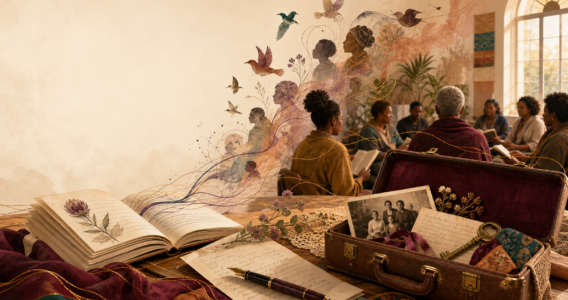
“Narratives in the Suitcase” is a narrative-therapy project developed by Ncazelo Ncube-Mlilo for children who are “on the move”—including migrant children, refugees and children living on the streets. I was particularly moved by the idea of a suitcase as a way of thinking about narrative: the things we carry with us as we move through life.
We all have suitcases, whether visible or invisible. They may contain memories of home, people we miss, words that stayed with us, cultural inheritance, survival skills, dreams we are still protecting, responsibilities we did not choose, losses that changed us and hopes that continue to call us forward.
Unpacking what matters
In creative workshops, poetry can become a powerful invitation:
- What do you carry that you want to honour?
- What has helped you survive?
- Who or what belongs in your story?
- What do you want to keep?
- What are you ready to put down?
- What do you want to take with you into the future?
These are not questions with quick answers. But poetry makes room for them. A poem can carry uncertainty, leave space and speak through symbol when direct language feels too exposed.
From the page to the room
My work is also interested in what happens when poetry leaves the page.
An installation, an exhibition, a reading, a community anthology or a shared creative space allows words to be encountered by others. Someone enters a room. They read a line. They pause. They see their own experience reflected back to them, or they are invited into a deeper understanding of another person’s experience.
That moment is part of the work. Poetry becomes a shared artefact: something that can be read, carried, displayed, returned to and witnessed together.
The reader becomes a witness
The poem is witnessed. The writer is witnessed. The reader becomes a witness too.
This is why installations and public creative encounters are important to me. They create opportunities for people to engage with stories they might not otherwise hear, and to do so at their own pace.
They can make space for reflection, empathy, recognition and conversation.
When stories become shared artefacts
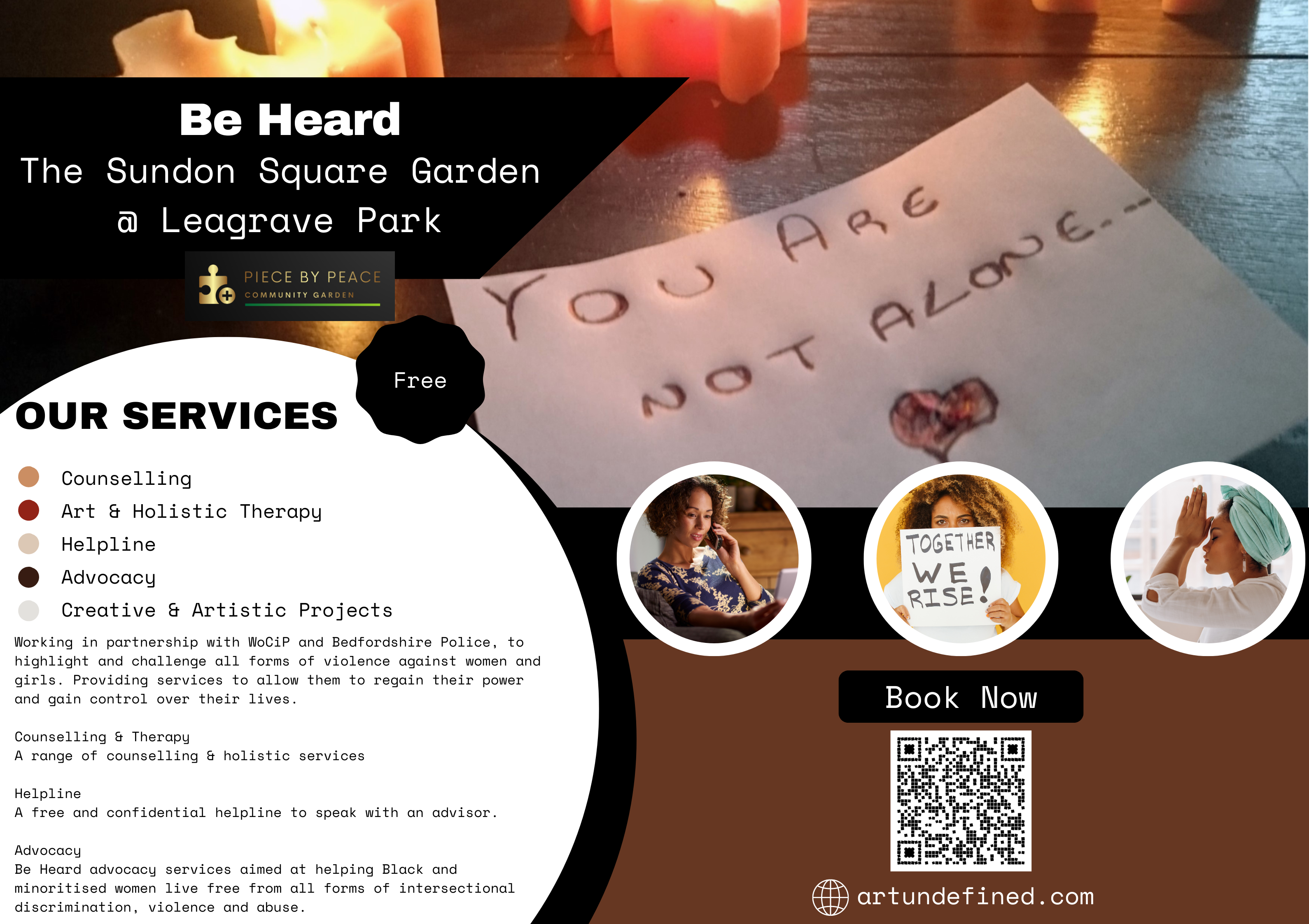
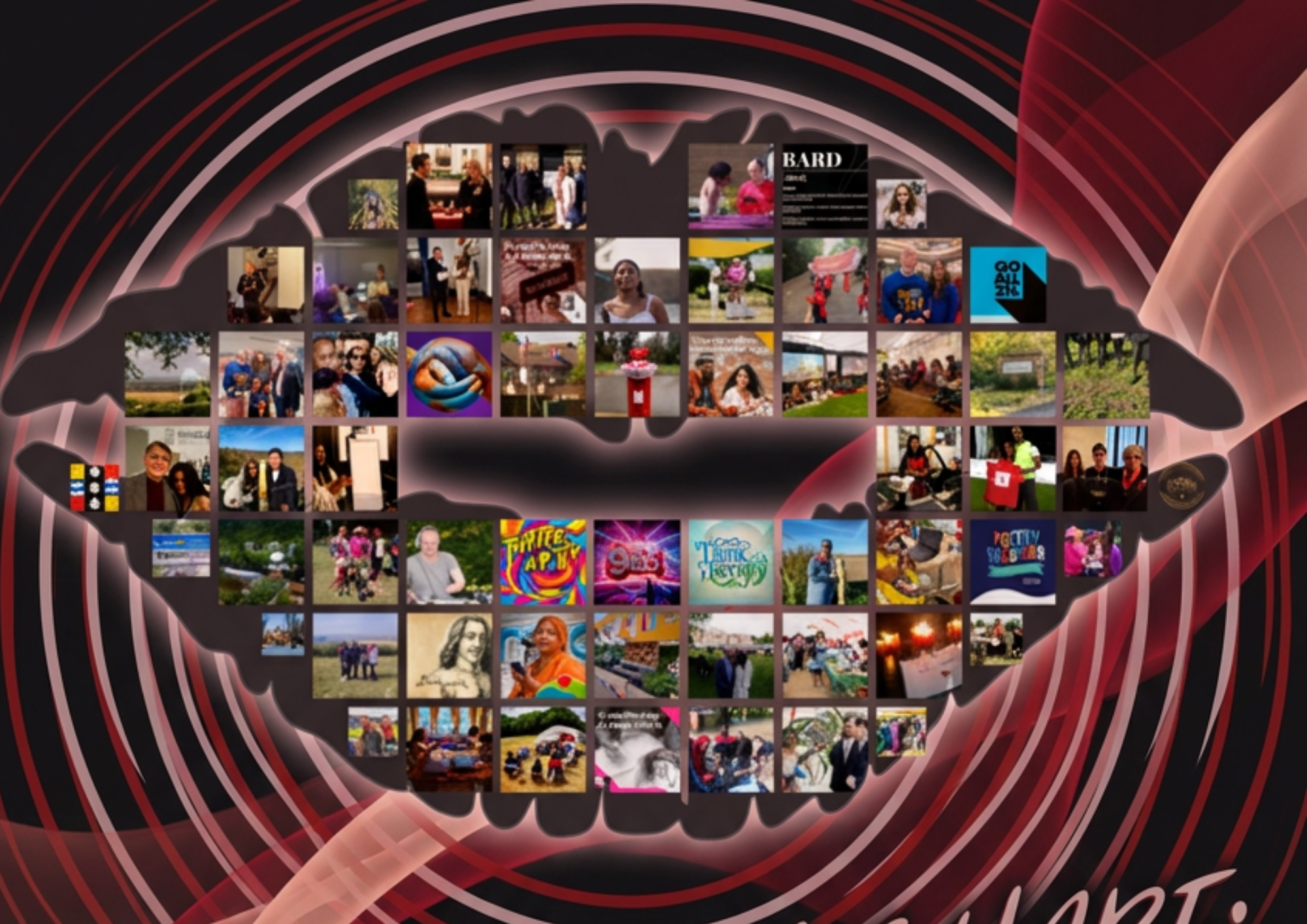
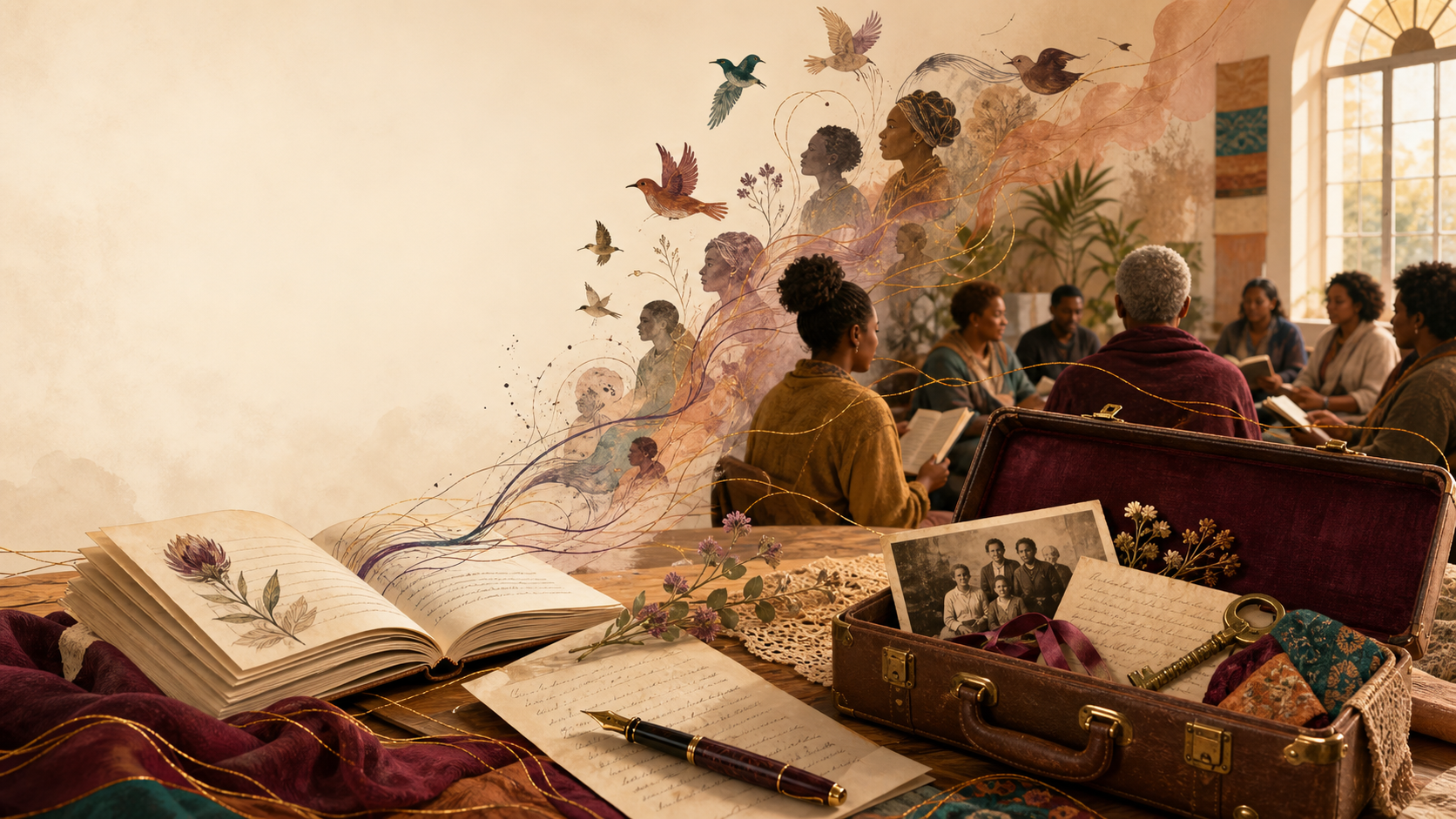
Flyers, anthologies, banners, installations and public-facing creative materials can all become forms of narrative documentation. They carry stories beyond the private moment of writing and into shared spaces where voices can be encountered, remembered and held with care.
Creativity as a companion
At Nine Red, my work is grounded in creating meaningful, people-centred spaces for expression, reflection and connection.
Across my work as Poetry Champion for Bedfordshire, the Our House projects, Butterflies in Shades of Grey, the Bedfordshire anthologies and Words Chose Me, I return to the same question:
How can creativity help people be seen more fully?
Part of the same commitment
The Poetry E.Motion collection and journey guide belong to this same thread. They are part of my ongoing commitment to poetry as a companion: something that can help us pause, feel, remember, question, release and begin again.
I do not see poetry as separate from community, wellbeing, justice, identity or recovery. Poetry is one of the ways I bring these things together.
Making room for voices
Poetry is how I listen.
It is how I make space.
It is how I witness.
And it is how I hope to keep building places—on the page, in a room, in an anthology, in an installation and in community—where people can say, in their own words:
This is my story.
This is what I carry.
This is who I am.
Our House
Explore installations, workshops and public conversations on voice, silence, justice, healing and belonging.
Books & anthologiesOur Books, Publications & Community Anthologies
Discover authored books, Poetry E.Motion, community anthologies and the wider literary practice behind Words Chose Me.
Journey guidePoetry E.Motion: Collateral Beauty
Explore poetry, prose, reflection and emotional wellbeing through the Poetry E.Motion book and journey guide.
Companion reflectionHu(e)man: Colour, Sound and Embodiment
Explore the connections between creative language, colour, sound, identity and embodiment.
Reflection question: What part of your story deserves to be held, recorded or witnessed—and what form might help you give it a voice?